Paper Labels vs Synthetic Labels: How to Choose the Right Material
2026-03-03

Paper Labels vs Synthetic Labels: How to Choose the Right Material
Choosing between paper labels and synthetic labels is a fundamental decision that impacts your product's durability, appearance, and cost. This guide breaks down the core differences, performance factors, and ideal applications for each material, giving you the clarity needed to make an informed choice for your specific needs.
Understanding the Core Difference: Material Composition
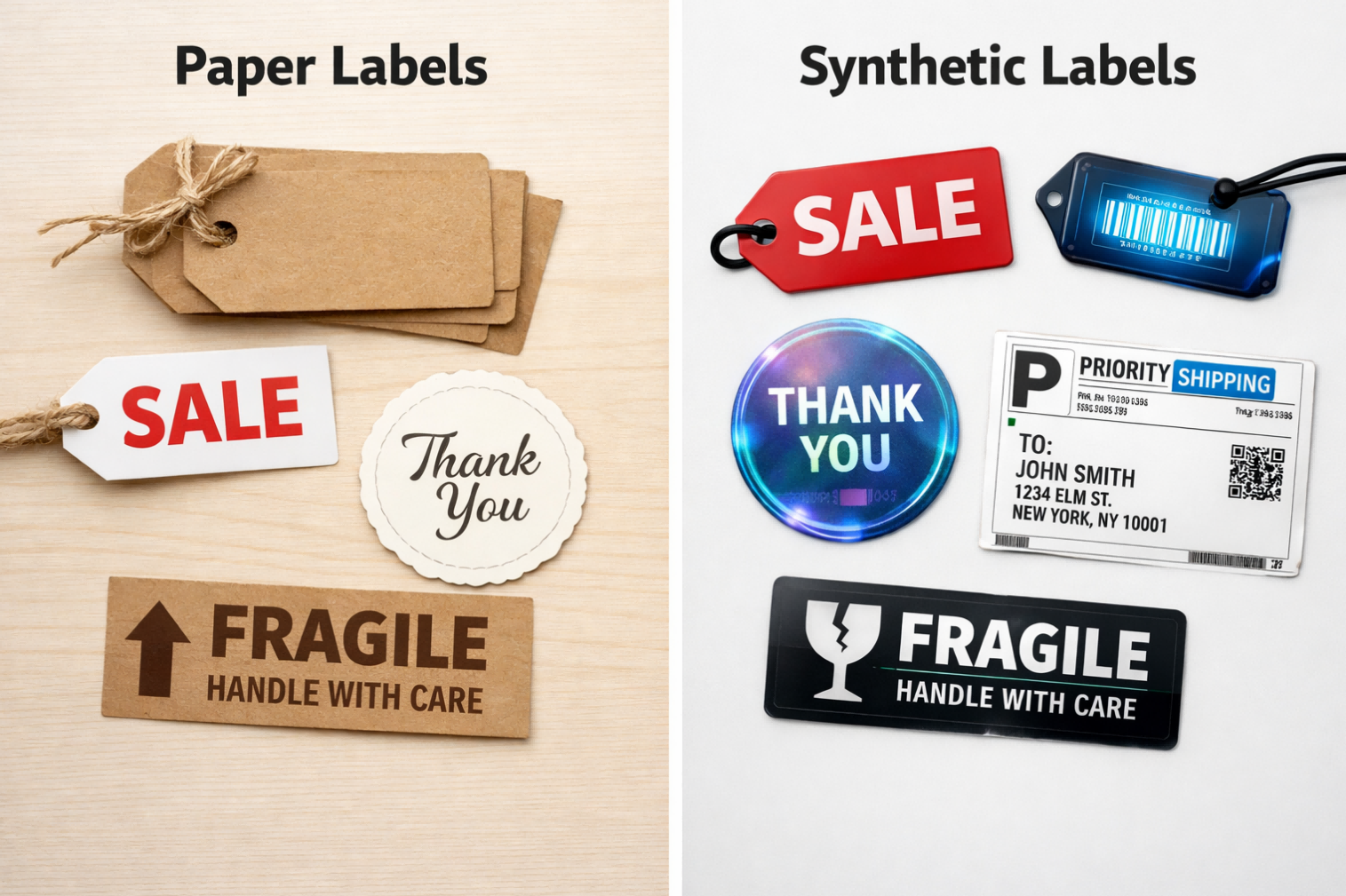
The most basic distinction lies in what they're made of. This fundamental difference dictates everything from how they feel to how they withstand the elements.
What Are Paper Labels Made Of?
Paper labels are crafted from cellulose fibers, typically derived from wood pulp or recycled paper. They are often coated with a thin layer of clay or polymer to improve print quality. Common finishes include:
Gloss: Provides a shiny, vibrant surface for high-impact graphics.
Matte: Offers a non-reflective, sophisticated look.
Uncoated: A porous, natural paper feel, ideal for writing or specific printing techniques.
This natural composition makes them breathable and gives them a traditional look and feel, but it also introduces vulnerabilities to moisture and wear.
What Are Synthetic Labels Made Of?
Synthetic labels are engineered from plastic polymer films. Common types include:
Polypropylene (PP): A versatile, cost-effective synthetic with good moisture resistance.
Polyethylene (PE): Often used for flexible packaging and squeeze bottles due to its pliability.
Polyester (PET): Extremely durable, resistant to heat, chemicals, and abrasion.
Vinyl: Conformable and durable, often used for outdoor applications and asset tagging.
This polymer base creates a non-porous barrier, giving synthetic labels their renowned toughness.
Key Performance Factors: A Head-to-Head Comparison
When evaluating paper labels vs synthetic labels, consider how they perform in real-world conditions.
Durability and Resistance
This is where the gap widens significantly. Paper labels are susceptible to water, oil, and friction. A spilled drink or greasy hands can smudge or ruin them. Synthetics, however, excel in harsh environments.
Water & Moisture: Synthetics are inherently waterproof; paper is not.
Oils & Chemicals: Synthetic films resist degradation from oils, solvents, and mild acids.
Abrasion & Tearing: Polymer films are much more tear-resistant and can withstand scraping.
UV & Temperature: Certain synthetics (like polyester) offer excellent resistance to fading and extreme temperatures.
Adhesive and Application
The adhesive must match both the label material and the surface. Permanent acrylic adhesives bond well with synthetics for challenging surfaces like glass, plastic, or metal. Removable adhesives are available for both types. The key is surface porosity: paper adhesives work well on corrugated cardboard, while synthetic label adhesives are designed for non-porous surfaces.
Printability and Finish
Both materials print well, but with different technologies. Paper labels are the go-to for standard office inkjet and laser printers. Synthetic labels typically require industrial printing methods like thermal transfer or UV inkjet for a permanent, smudge-proof result. The finish on synthetics can be exceptionally high-gloss or matte, often with a "no-label" look that integrates seamlessly with plastic packaging.
Cost Analysis: Initial Price vs. Total Value
Looking only at the per-label cost tells half the story. The true value is measured over the label's entire lifespan.
Upfront Material Costs
Paper labels are generally the more economical choice upfront. The raw materials and manufacturing processes are less expensive, making them ideal for high-volume, cost-sensitive projects like internal shipping or short-term retail promotions.
Long-Term Value and Lifespan
Synthetic labels often provide a lower total cost of ownership for demanding applications. Consider a cleaning product bottle: a paper label may degrade, requiring a customer complaint or a product return. A synthetic label lasts the life of the product. This durability reduces waste, rework, and brand perception issues, justifying the higher initial investment.
Choosing the Right Label: Application-Based Decision Guide
Your choice should be driven by the label's end-use environment. Ask: Where will this label live, and what does it need to endure?
When to Choose Paper Labels
Paper is the perfect candidate for dry, controlled, and often temporary applications.
Product packaging for dry goods (boxed food, retail products).
Shipping and address labels.
Event badges, name tags, and short-term promotions.
Indoor asset tracking in office environments.
When to Choose Synthetic Labels
Choose synthetic when the label faces environmental challenges.
Products exposed to moisture (beverages, cosmetics, cleaning supplies).
Outdoor equipment, machinery, and utility tags.
Labels requiring sterilization (medical, lab, food processing).
High-abrasion environments (tool labels, industrial parts).
Applications needing extreme flexibility (squeeze bottles).
Environmental and Sustainability Considerations
Both materials have an environmental footprint, but of different kinds.
Paper Labels: Biodegradability and Recycling
Paper labels, especially uncoated ones, are biodegradable and come from a renewable resource. They are widely accepted in paper recycling streams. The challenge lies in the adhesive and any silicone release liner, which can contaminate recycling if not properly managed. Sourcing from sustainably managed forests (FSC-certified) is a key consideration.
Synthetic Labels: Recyclability Challenges and Innovations
Traditional plastic films can complicate recycling by contaminating PET bottle streams. However, the industry is innovating with solutions like:
Wash-Off Adhesives: Labels designed to detach during recycling.
Recyclable Polymer Films: Films compatible with specific recycling streams.
PP-based Labels: Using a single polymer type (like PP on a PP bottle) to simplify recycling.
Proper waste stream communication (e.g., How2Recycle labels) is crucial for effective end-of-life handling.
Making Your Final Decision: A Summary Checklist
Before ordering, run through this quick list:
Will the label be exposed to moisture, oils, or chemicals?
Is it for indoor or outdoor use?
Does it need to withstand abrasion, flexing, or extreme temperatures?
What is the expected lifespan of the product/label?
What printing method will I use?
What are my sustainability goals and end-of-life considerations?
Answering these questions will steer you clearly toward either paper labels or synthetic labels. The right choice protects your product, reinforces your brand, and provides the best value for your specific application.
Frequently Asked Questions: Paper Labels vs Synthetic Labels
Can synthetic labels be recycled?
It's complex. Traditional plastic labels can hinder recycling. Look for films with specific recyclability claims (like compatible with PET bottle streams) or wash-off adhesives designed for recycling facilities.
Are paper labels waterproof?
Standard paper labels are not waterproof. They can be treated with a varnish or laminate for limited water resistance, but for true waterproof performance, a synthetic material is required.
Which label material is better for outdoor use?
Synthetic labels are far superior for outdoor use. Materials like polyester or vinyl offer excellent resistance to UV fading, moisture, and temperature swings, ensuring the label remains legible and intact.
Is it more expensive to print on synthetic labels?
Often, yes. While the material cost is higher, the main factor is printing technology. Synthetics usually require industrial printers (thermal transfer, UV inkjet), which have a higher operational cost than standard office printers used for paper.
Can I use a regular printer for synthetic labels?
Generally, no. Most synthetic materials are not designed for the heat of a laser printer or the aqueous inks of an inkjet. Special synthetic sheets for inkjet printers exist but are less common. For reliable, durable results, industrial printing is recommended.